Decker’s refusal to accept the divorce
The ExceptionDecker’s refusal to accept the divorce is the continuing conflict between his claim over Jada and her insistence that the marriage and his authority over her are over. It extends a pattern of volatility and manipulation beyond the marriage itself: even after Jada leaves, divorces him, and builds a life elsewhere, Decker treats separation as something she can be made to reverse. Her increasingly direct refusals expose the contrast between his assumptions and her reclaimed right to choose.
Background: A marriage shaped by control
Before the separation, Decker’s conduct shifted unpredictably between ordinary affection and intimidating anger. He could bring home takeout for a movie night, then become irrationally furious and corner Jada with insults. The alternation left her confused and exhausted; when she found the resolve to leave, he could switch back into the more decent husband she hoped he might be. Jada kept their situation private, even from Kari, because it was painful and embarrassing, and because she could not explain why she had put up with it.
Decker’s pressure also drew on Jada’s insecurities and the life they had planned. He emphasized that leaving would mean starting over with virtually nothing, and invoked the family she had hoped to have and the promises she had made at their wedding. These appeals made the decision to leave feel like a choice between an unsafe relationship and losing the future they had built. Jada describes the cycle as difficult to escape until she encountered proof of his infidelity rather than merely suspecting it.
After witnessing Decker with their neighbor Sarah, Jada left that night and moved her belongings to the home of her friend Mandi and Mandi’s husband, Mason. Decker had never hit her, but Jada did not know how he would react, and Mason’s presence made the move feel safer. Decker alternated between pleading for her to return and cursing her. During a drunken episode, he appeared at Mandi’s door; after an encounter with Mason, he did not return there, but continued to complicate Jada’s life by fighting the divorce. His prediction that she would come back gives the later conflict its central refrain: he treats her departure as temporary even when she has acted decisively.
After the divorce: Contact and attempted return
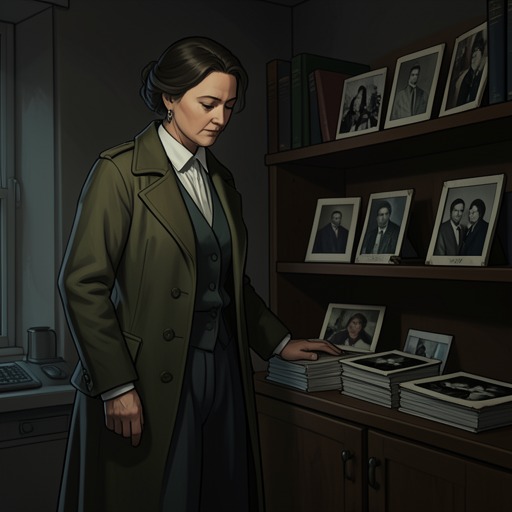
The divorce does not end Decker’s efforts to reach Jada. At one point he sends her a package of photographs she had left in the back of his closet. The images include a college-era photograph, a picture from their wedding, and a photograph of their first house in Boston. They bring back memories of a life Jada had wanted to leave behind, including the pride she had once felt in that house. The package makes their shared past physically present, but the evidence does not turn nostalgia into a reason for her to reconcile: Jada responds to the photographs by telling Decker she will dispose of them.
When Decker calls, Jada immediately asks what he wants and reminds him that she has asked him not to contact her. He says that he had been unable to find her new number for a long time, but that doing so was not impossible. Rather than accept her boundary, he portrays her refusal as a petty game and insists that she is wasting his time. He again predicts that she will return and tells her to come home. His language makes the underlying assumption plain: he interprets her separation as defiance to be overcome, not a settled decision.
Jada answers by identifying the divorce as evidence that she does not want to see him again. When Decker raises his voice and insults her, she warns that another call will lead her to look into a restraining order. The warning is an assertion of a boundary, not evidence that she obtains an order. Decker challenges the idea that it could be that simple; Jada counters that her life is now her own and that he has no say in what she does. The exchange shows the conflict shifting from the private conditions of the marriage to Jada’s explicit defense of her independence.
Confrontation and competing claims
During an earlier confrontation in a park, Decker accuses Jada of not wanting the marriage to work. She answers with the history he leaves out: nights spent afraid he would come through the door angry, repeated infidelity, and the discovery that finally ended her willingness to endure the relationship. She says that she had tolerated far more than anyone should in the hope that the marriage would work, and that the result was humiliation. When he tries to interrupt, she refuses to let him turn her defense into another occasion for control. For the first time, she feels free enough to speak plainly, and describes the confrontation as lifting a weight.
That shift is also present when Decker warns her to watch herself and insists that she will always belong to him. Jada rejects the premise directly: she is no longer his wife, girlfriend, or anything else, and the divorce is documented. The paper matters because it answers his possessive language with a fact he cannot undo by declaring that she remains his. Yet Jada also reflects that she had allowed him to make her feel worthless for a long time. Her recognition of that history accompanies her resistance; it does not excuse Decker’s conduct or make the responsibility for his treatment hers.
Decker’s later suspicion that Jada has a boyfriend further recasts her independence as someone else’s influence. He suggests that a new partner must be filling her head with criticism of him, rather than accepting that Jada can judge the marriage and choose to leave on her own. When he arrives at Cane Alexander’s home asking for his wife, he again speaks as though the relationship remains in force. He tells Jada to pack and go home, while Cane’s question about their recent conversation reveals that Decker has already been trying to reach her. The scene turns the disputed status of the marriage into a direct confrontation: Decker issues a command, but the divorce and Jada’s refusal contradict his claim to obedience.
Consequences and significance
Decker’s continued intrusion has consequences beyond any single call or visit. Jada’s memories return in nightmares: she wakes in a cold sweat, searching the room and hearing his old accusations in her mind. The past is therefore not simply over when the marriage ends; its fear persists in her present. At the same time, the narrative places those involuntary returns beside increasingly deliberate acts of resistance: leaving, warning him to stop calling, threatening to seek legal protection, and refusing his demand to go home.
The conflict is not presented as a mutual failure to agree about whether the marriage should continue. Decker’s insistence that Jada will return is set against her account of fear, manipulation, infidelity, and the final decision to leave. His appeals to their shared past and his attempts to define her choices do not restore the marriage; they reveal how little he accepts her authority over her own life. Jada’s refusal to comply is consequently more than a rejection of reconciliation. It is the visible change at the heart of this state: the person who once struggled to explain why she stayed now names what happened and asserts that her future belongs to her.